How I Actually Use AI in Real Projects (Without the Hype)
AI Is a Tool, Not the Product
AI is everywhere right now. New tools, new models, new promises — often presented as magic solutions to complex problems. But in real projects, AI rarely works that way.
In my experience, AI is most valuable when treated as a tool, not the product itself. It doesn’t replace good engineering, clear requirements, or thoughtful system design. Instead, it amplifies them when used correctly.
The biggest mistake I see is trying to “add AI” before understanding what problem actually needs solving.
Start With the Problem, Not the Model
When working on AI-driven projects, I always start by asking simple questions:
What is slow? What is repetitive? Where do humans lose time or make avoidable mistakes?
Only after those questions are answered does it make sense to consider AI. Sometimes the solution is automation. Sometimes it’s better UX. And sometimes, yes, AI is the right choice — but only when it adds clear value.
This mindset avoids unnecessary complexity and keeps systems focused on outcomes, not trends.
Where AI Actually Adds Value
In practice, I’ve seen AI work best in areas like text processing, speech workflows, classification, and decision support. These are places where patterns exist, scale matters, and small improvements can save a lot of time.
Instead of trying to make AI “smart,” I focus on making it useful. That usually means:
Clear inputs
Well-defined outputs
Human-readable results
Fallbacks when AI is uncertain
AI doesn’t need to be perfect. It needs to be reliable enough to support real workflows.
AI Needs Structure Around It
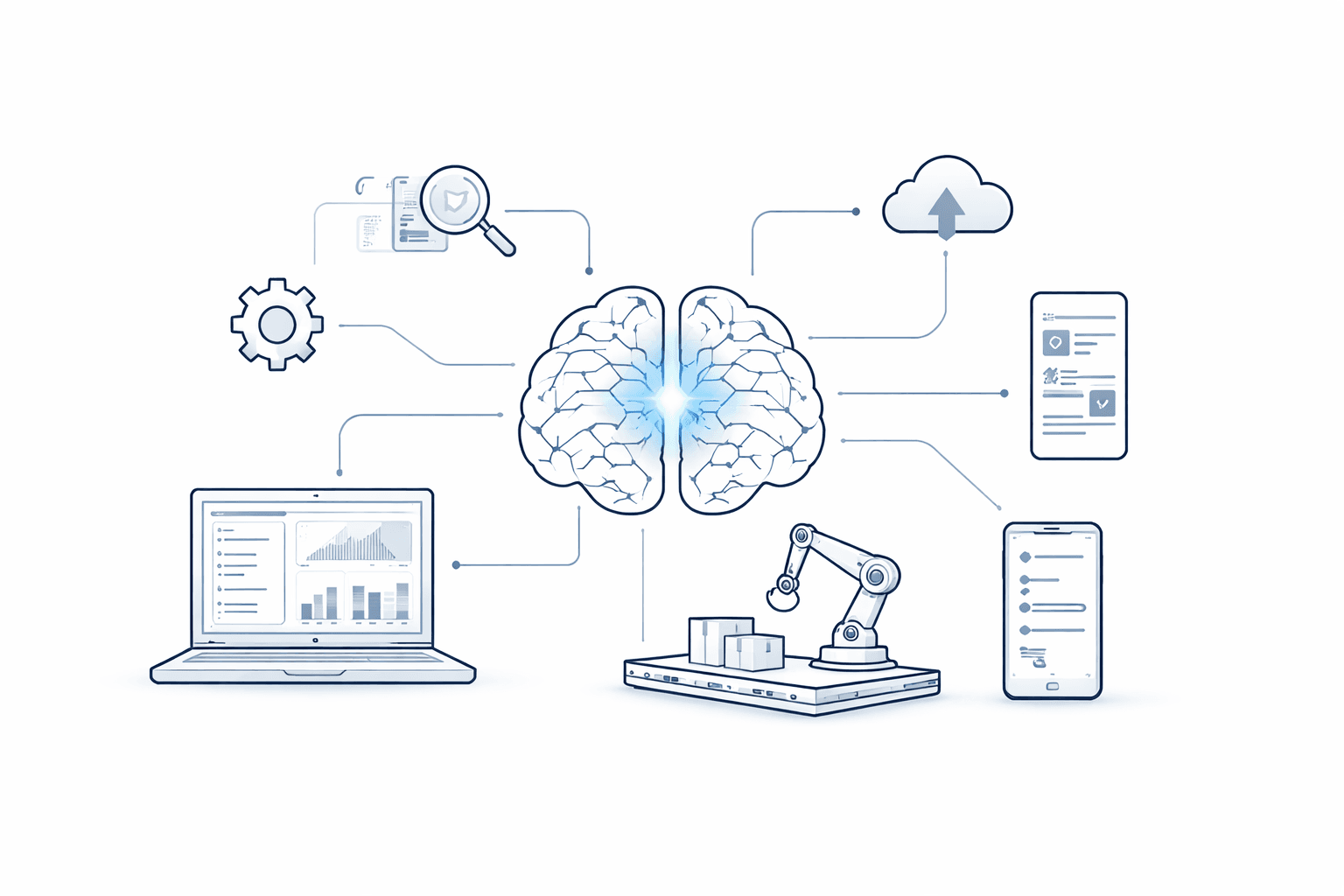
One thing that’s often overlooked is that AI systems don’t live in isolation. They need structure around them: pipelines, validation, logging, monitoring, and clear boundaries.
Most of the work in AI projects isn’t training models — it’s building the systems that make those models usable in production. Without that structure, even the best model becomes unreliable.
This is where traditional software engineering matters just as much as machine learning.
Avoiding the “Black Box” Trap
Another lesson I learned early is to avoid treating AI as a black box. If a system makes decisions that no one understands, trust erodes quickly.
I try to design AI-powered features in a way that keeps humans in the loop. Outputs should be explainable, adjustable, and easy to override when needed. This makes systems more trustworthy and easier to improve over time.
AI should support human decision-making, not replace it blindly.
Simple Systems Beat Clever Ones
It’s tempting to overengineer AI solutions — chaining models, adding complexity, optimizing too early. In reality, the most successful AI systems I’ve worked on were simple, focused, and easy to reason about.
A clear pipeline with one well-chosen model often outperforms a complex system that’s hard to maintain. Simplicity makes systems easier to debug, scale, and evolve.
My Takeaway
AI is powerful, but it’s not special on its own. It becomes valuable when combined with clear thinking, solid engineering, and a deep understanding of the problem.
The projects that succeed aren’t the ones with the most advanced models — they’re the ones where AI quietly improves real workflows without getting in the way.
That’s the approach I aim for: practical, intentional, and grounded in reality.